Emerging Highs: How Social Media and Vaping Are Driving a New Era of Teen Drug Use
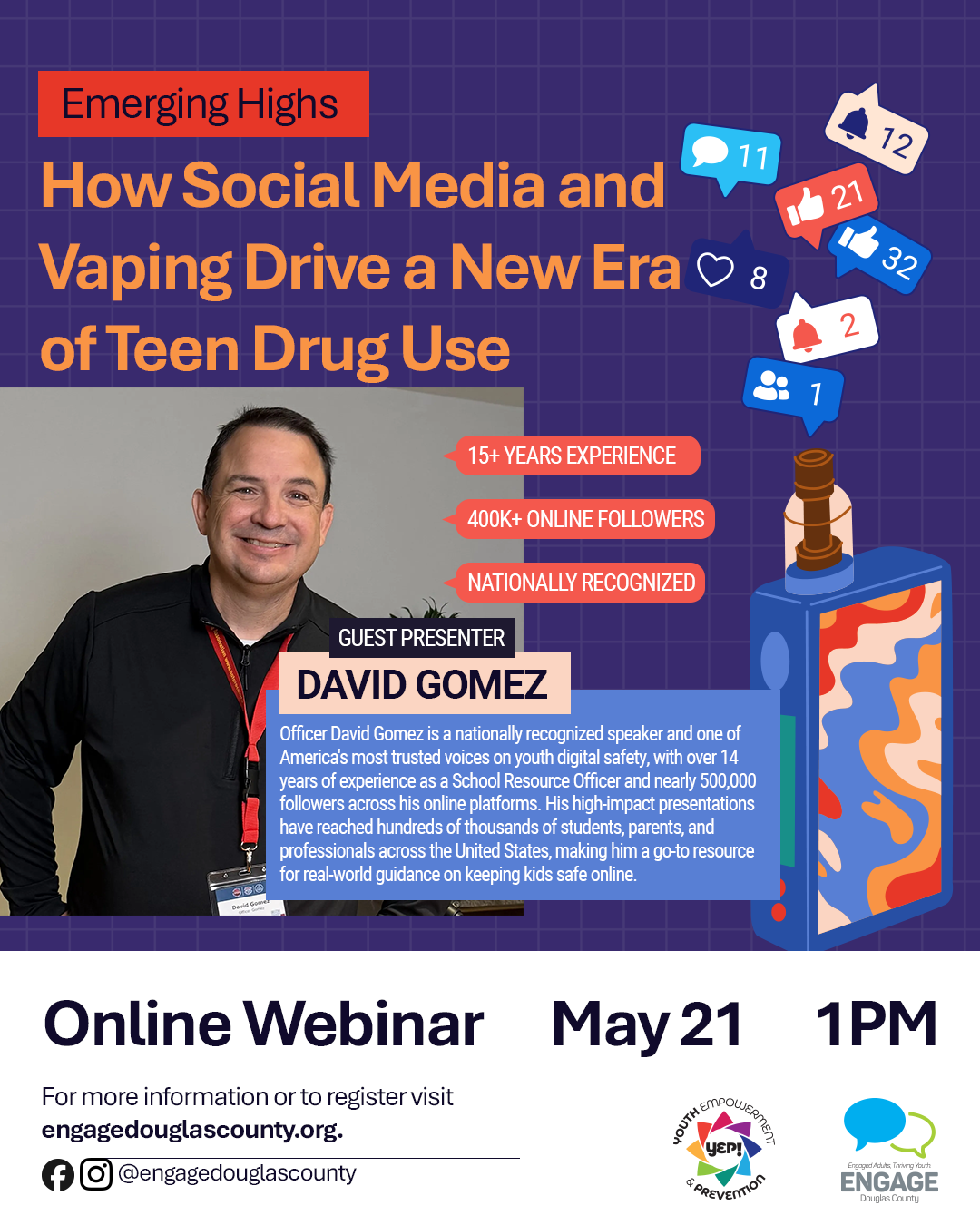
Join Engage Douglas County for a free, eye-opening webinar featuring youth prevention expert Officer David Gomez — and learn what every parent, educator, and community member needs to know right now.
Presented by Engage Douglas County · Special Guest: Officer David Gomez
The landscape of teen drug use has changed dramatically. Today's risks don't just come from street corners — they come through smartphone screens, discreet vaping devices disguised as everyday objects, and social media algorithms that normalize substance use before a teenager can recognize what's happening. For parents, educators, and youth-serving professionals, keeping up can feel overwhelming.
That's exactly why Engage Douglas County is hosting Emerging Highs: How Social Media and Vaping Drive a New Era of Teen Drug Use — a free, community webinar designed to cut through the noise and give you the knowledge and tools to make a real difference in the lives of young people.
What This Webinar Is About
Led by special guest presenter Officer David Gomez, a seasoned expert in youth prevention, this webinar takes an honest, up-to-date look at how substance use trends are evolving among teenagers — and what communities can do about it. Officer Gomez brings frontline experience and prevention expertise together to help families and professionals understand not just what's happening, but why it's happening — and how to respond effectively.
Current Trends You'll Learn About
Teen drug use looks different than it did even five years ago. This webinar will walk you through the most pressing trends shaping the current landscape, including:
The rise of vaping and e-cigarettes — including devices engineered to evade detection
How social media platforms expose teens to drug culture, challenges, and peer pressure
Emerging substances and combinations that are appearing in schools and communities
The role of online marketplaces and encrypted messaging in teen substance access
How substance use intersects with mental health, anxiety, and social isolation
Warning Signs to Watch For
One of the most valuable parts of this webinar is learning what to actually look for. Many signs of teen substance use are subtle — and some are deliberately hidden. Officer Gomez will help you identify:
Behavioral changes such as withdrawal, mood swings, or sudden shifts in friend groups
Physical signs specific to vaping, cannabis, or other substances common among teens
Red flags in social media activity, language, and online behavior
Changes in academic performance, sleep patterns, or appetite
Secretive device or app use and unfamiliar paraphernalia
Protective Factors That Make a Difference
Prevention isn't just about spotting problems — it's about building the conditions that make young people more resilient in the first place. This webinar will equip you with evidence-based protective factors you can start applying right away:
Strong, open communication between teens and trusted adults
Connection to school, community, and meaningful activities
Media literacy skills that help teens critically evaluate online content
Clear, consistent family expectations and boundaries around substance use
Access to mental health support and healthy coping strategies
What You'll Walk Away With
Whether you're a parent trying to start a difficult conversation, a teacher noticing changes in a student, or a community leader building prevention programs, this webinar is designed to leave you better prepared. Attendees can expect to gain:
A clear picture of the current teen drug use landscape
Practical tools for talking to young people about substance use without shutting down the conversation
Strategies for monitoring online activity while maintaining trust
Local and national resources for families and youth professionals
Confidence to take action — early, and effectively
Who Should Attend
This webinar is open to anyone who cares about the wellbeing of young people in our community. It is especially relevant for parents and guardians of middle and high school students, K–12 educators and school counselors, coaches, youth ministry leaders, social workers, and healthcare providers who work with adolescents.
No prior knowledge or professional background is required — just a willingness to show up for the next generation.